
Owala FreeSip Analyzed: 'How a Newcomer' Stole Market Share from Hydro Flask
Sep 18, 2026
Leave a message
In the Reddit thread "Which water bottle have you used the longest?" (r/BuyItForLife, a community of 1.2M+ members)-the same thread where Nalgene earned the highest loyalty rating-a relatively new brand appeared alongside the veterans: Owala.
Owala received a 4-star mention rating, tied with Hydro Flask and YETI. For a brand that entered the market much later than these established players, that's notable.
Here's what users said-and what it tells us about product design.
What Users Actually Said About Owala
One comment in the Owala discussion focused on a detail most brands overlook:
"I love mine bc: the lid isn't black so I can tell if mold is growing in it, it has a straw and a pour lid, it seals." - 158 upvotes
Another user highlighted the brand's approach to feedback:
"They do an amazing job of listening to customer feedback and using that to improve their products." - 39 upvotes
Multiple users also mentioned Owala's customer service-specifically, receiving free replacement lids when something went wrong. These comments were heavily upvoted.

Design Breakdown: Why Owala Works
From a product design perspective, Owala's success comes down to a few specific decisions:
Dual-drink lid (FreeSip). One lid, two ways to drink-a straw for sipping and a wide opening for pouring or chugging. This solves a real problem: people want convenience without carrying two bottles.
Transparent lid. A non-black, clear lid lets users see inside. This directly addresses the mold concern that plagues insulated bottles. It's a small change with a big trust impact.
Hidden carry loop. The handle is integrated into the lid, not sticking out. This makes the bottle easier to carry and less likely to snag.
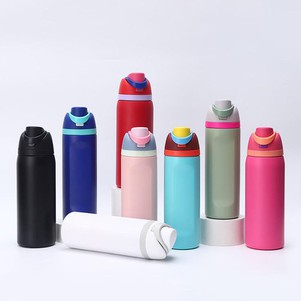
Color strategy. Owala offers bold, rotating colorways that appeal to younger consumers. This drives collection behavior-users buy multiple bottles in different colors.
Leak-proof seal. A bottle that seals properly is a baseline expectation-but many brands still fail at it. Owala made it a core selling point.

What Owala's Success Means for Brands and Buyers
Owala didn't invent the water bottle. It didn't have the longest history or the biggest marketing budget. But it grew fast-and the reasons are instructive.
Lesson 1: Solve a real, visible problem.
Mold in water bottles is a common complaint. Owala's transparent lid doesn't just look different-it lets users verify cleanliness. That's a design decision driven by a real user pain point.
Lesson 2: Listen, then act.
The comment about Owala listening to customer feedback wasn't an accident. The brand actively incorporates user input into product iterations. For buyers, this means the product you stock today may be better than the one from last year.
Lesson 3: Customer service is part of the product.
Free replacement lids. Responsive support. These aren't just "nice to have"-they're part of why users trust the brand. For B2B buyers, this matters: a brand that supports end users well is less likely to generate returns and complaints.
Lesson 4: Design is a competitive moat.
Owala's dual-drink lid isn't easily copied without infringing on patents. Its color strategy creates brand identity. Its transparent lid is simple but effective. These are design decisions that create differentiation in a crowded market.
What This Means for Your Product Line
If you're sourcing or manufacturing drinkware for the North American market, Owala's rise offers a clear signal: consumers are rewarding brands that solve specific, visible problems-not just brands with the lowest price or the longest history.
Consider these questions for your own product line:
• Does your bottle solve a problem users can see? (e.g., mold visibility, cup holder fit, leak-proofing)
• Does your lid design offer something different-or is it a copy of what's already out there?
• Are you offering colors that drive repeat purchases, or just basic black and white?
• Do you have a customer service story that buyers can trust?
Owala didn't win by being first. It won by being different-in ways that mattered to users.

Manufacturer's Perspective: Why Chinese Factories Can Capture This Opportunity
From a manufacturing perspective, Owala's success points to an opportunity that Chinese factories are well-positioned to capture.
First, design innovation doesn't require reinventing the bottle. Owala's key differentiators-transparent lid, dual-drink opening, hidden handle-are all mold-level changes. A factory with strong tooling and mold development capabilities can execute similar innovations.
Second, color and finish are low-cost, high-impact. Rotating colorways and custom finishes don't require new tooling-just a new production run. For buyers, this means you can offer variety without increasing costs significantly.
Third, customer service can be built into the B2B relationship. If you support your buyers the way Owala supports its end users-fast response, replacement parts, flexible problem-solving-you become the supplier they keep coming back to.
At [Polywell Group], we don't just copy what's selling. We help brands turn design concepts into manufacturable products-from mold development to color matching to packaging. If you have a product idea that needs a factory partner, we'd like to hear it.
Send Inquiry